

Choose and preserve apples well can reduce household waste and avoid the consumption of spoiled fruit. The review begins at the point of sale and continues at home, with simple measures of hygienecooling and separation of other vegetables.
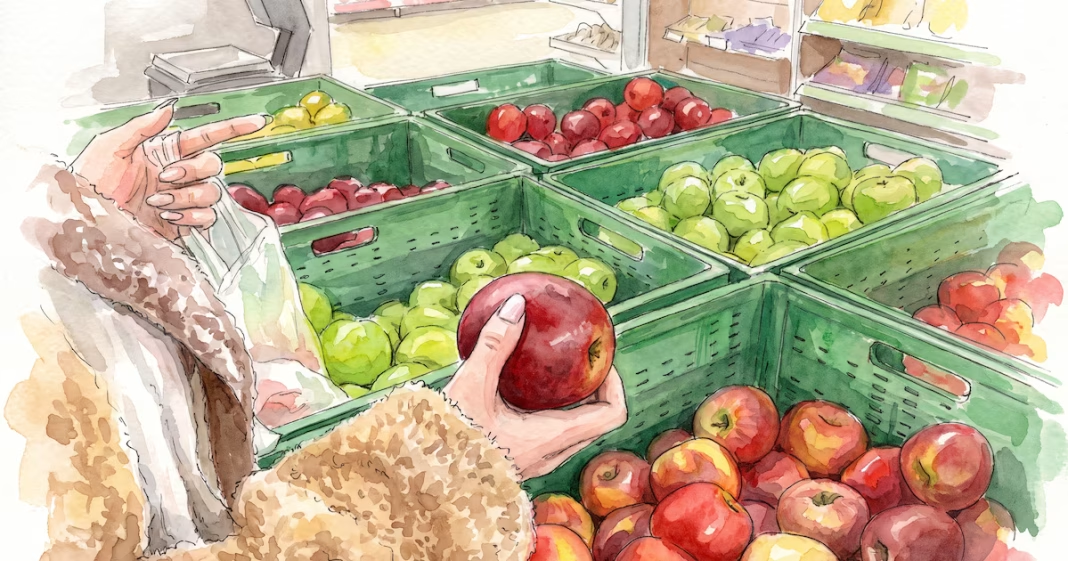
When selecting apples, it is a good idea to look at the surface and check the consistency with gentle pressure. The nutritionist Anna Chumbley recommended choosing firm specimens, smooth skin without bumps or breaks in statements collected by Eat wellsite specialized in food. Bruised or open areas reduce the quality of the fruit and promote its deterioration.
Appearance is not the only indicator. A sour or fermented smell You may notice that the pulp has started to decompose, even if the outside looks acceptable. Therefore, the purchase can be guided by a brief review of three points:
- Uncut skinperforations or visible damage.
- Firm texturewithout excessively soft areas.
- fresh scentwithout acidic or fermented notes.
The United States Food and Drug Administration (FDA) advises discarding fresh produce that appears rotten and removing damaged or bruised parts before preparing it.
It also recommends separating fruits and vegetables that will be eaten raw from raw meats, poultry, and fish, both during storage and preparation.

The sour or fermented smell reveals possible changes in the pulp. (Illustrative Image Infobae)
The sign that requires greater caution is the presence of moldy. Mark McShanefood safety specialist, pointed out Eat well that I wouldn’t buy an apple with white, green, or blue cottony growtheither on the peel, near the stem or on a damaged part.
The reason is that the fungal growth may extend beyond the visible portion. Cutting the affected sector does not confirm that the rest of the fruit is suitable for consumption, McShane explained. Faced with a moldy apple, The most prudent alternative is to discard it.
This is not the same as treating any surface irregularities such as mold. A small bruise with no signs of decay can be removed before eating, as the FDA says. However, changes in texture, smell or color They must be evaluated together with the general condition of the piece.

Apples retain their texture better when refrigerated. (Illustrative Image Infobae)
Apples retain their texture better when stored refrigerated. Chumbley explained that they also release ethylenea gas that accelerates the maturation of sensitive products.
That’s why, keep them away from leafy vegetables and broccoli can help preserve these foods for longer. Practical guidelines for the home are as follows:
- Place the apples in the fruit and vegetable drawer of the refrigerator.
- Use a perforated bag, which allows air exchange and retains some humidity.
- Avoid coming into contact with raw meat, poultry or fish.
- Periodically check the parts and remove any that show deterioration.

Ethylene gas accelerates the ripening of some vegetables stored nearby. (Illustrative Image Infobae)
The FDA recommends washing fruits and vegetables under running water before preparing or eating them, even if the peel will not be consumed.
It is not advisable to use soap, detergents or commercial solutions to wash fresh produce, as they can be absorbed into porous foods and their residue can be harmful. Washing reduces bacteria that could be present, but does not eliminate them completely.
The recommendation to wait until the moment of consumption also responds to conservation. Water remaining on the surface during storage can promote the microbial growth and accelerate product alteration. After rinsing, the FDA suggests drying it with a paper towel or clean cloth.

Washing the apples is done under running water before consumption. (Illustrative Image Infobae)
Selecting and storing fruit is part of household measures against food waste. The Food and Agriculture Organization of the United Nations (FAO) recommends planning purchases, making a list based on the foods available at home and keeping the refrigerator in adequate condition. He also advises placing the products that should be consumed first in front.
According to the FAO, reducing waste in households reduces the unnecessary use of resources such as water, energy, land, work and money. In addition to limiting the amount of waste that reaches landfills.


