
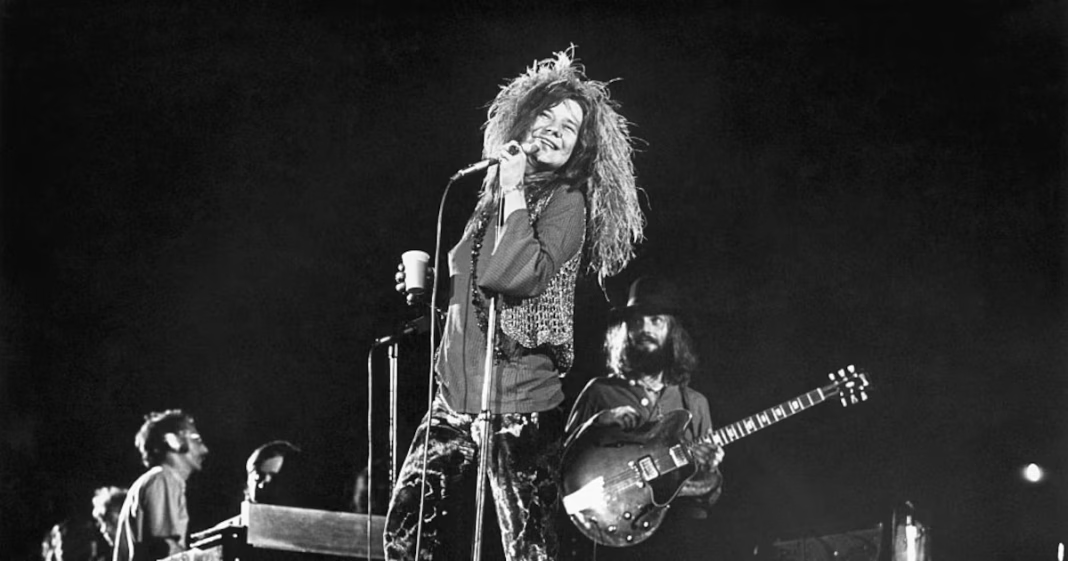

October 4th is celebrated 56 years since the death of Janis Joplin which occurred in 1970, when he was 27 years old. More than half a century later, its image retains a recognizable presence in the cycle of trends that returned prominence to the bohemian style: layers of garments, textiles with a handmade appearance, glasses with colored lenses and overlapping accessories.
His contribution did not lie in establishing a uniform, but in using clothing as an extension of his place in the counterculture and his way of occupying the stage.
Born in 1943 in Port ArthurTexas, Joplin moved to San Francisco during the expansion of the hippie and psychedelic scene of the 1960s.
There she consolidated an aesthetic that moved away from the neat silhouette, the geometric miniskirts and the carefully constructed makeup that also defined part of the fashion of her time.

The accumulation of necklaces, bracelets, medallions and glasses with colored lenses defined the artist’s visual signature.
The loose hair, the mixture of prints and the accumulation of objects made each outfit seem put together by association rather than obedience to a rule.
The starting point of her wardrobe was a mobile and wide silhouette. Joplin turned to wide-leg pants, bell-sleeved blouses, vests, tunics, and velvet or suede pieces.
Comfort was functional for their performances, but that criterion did not eliminate elaboration: contrasts in texture and color defined outfits that moved away from the logic of the evening dress or the traditional stage costume.
Garments with fringes are one of the most visible references in that repertoire. In the sixties, the resource referred both to Western culture and to the commercial appropriation of indigenous motifs and to the crafts that circulated in fairs and alternative stores.

The glasses with round colored lenses and the feather boas consolidated the visual presence of the artist on stage.
Today it reappears on jackets, bags and skirts, although its review requires attention to the origin of the motifs and the production of each piece. In the case of Janis JoplinThe fringe integrated an image of movement and did not function as an isolated detail.
The return of boho in recent collections takes up, with adjustments, that formula. The catwalks and the mass market favor long dresses, lace, suede, crochet and airy blouses.

Janis Joplin used clothes as an extension of her stage presence
However, Joplin’s most current look is in the combination: a vest over a printed shirt, several necklaces over a simple neckline or wide pants that balance a busy top. The contemporary reading can reduce this sum to two or three elements to avoid the literal reproduction of a period costume.
The singer used jewelry as an additional surface of the outfit. Long bead necklaces, large rings, bracelets and lockets appeared in stacks, often in different materials and colors.

The artist drew sketches and collaborated with designer Linda Gravenites to create costumes for her presentations.
This accumulation breaks with the principle of a single accessory and turns the body into a support for objects with diverse origins. The operation is recognized in current fashion, where chains, beads, pendants and vintage pieces are combined again on various levels.
Glasses with round, tinted lenses, hats and feather boas were also decisive. They were elements visible from afar and contributed to building a stage presence without depending on a formal garment.
Colored glasses and feathers functioned as expressive resourcesnot as discreet accessories. This difference helps to understand why his photographs remain valid on social networks and editorials: accessories concentrate an important part of the visual narrative.

The performer’s aesthetic proposal challenged the expectations of femininity that weighed on women in rock.
To transfer these references to the present, the key is not to gather all the symbols associated with Woodstock. A flowing dress with sturdy boots, round-framed glasses or a selection of second-hand jewelry allows you to preserve the contrast that characterized the artist.
The combination of new and recovered garments also connects with the current interest in extending the useful life of clothing and searching for pieces outside of standardized circuits.
The so-called boho is usually presented as a broad category that brings together hippie, romantic, folk and artisanal references. That breadth can erase differences between cultural traditions, crafts, and historical contexts.

The recent collections of mass fashion rescue the boho style through long dresses, lace, suede and crochet
Joplin’s wardrobe, built at a time marked by the American counterculture, should not be read as a template without time or origin. Her power was linked to a singer who questioned the expectations of femininity and neatness applied to women in rock.
The artist’s presence on stage also challenged the separation between fashion and authenticity that usually organizes the story about musical stars. Their outfits were not without intention because they seemed improvised.

The current adaptation of the bohemian style promotes the use of second-hand clothing and the contrast between materials
Various records in his archive show sketches he made for pieces for his presentations and his work with designer Linda Gravenites. Joplin he thought of his costumes as part of his performancewith indications on color, brightness and materials.
This dimension is relevant in a present in which the appearance of spontaneity is usually planned for networks. The singer’s visual disorder had composition: loose clothing, prints and jewelry predominated, but there was a clear focus on the face, voice and movement.
Fashion that takes its reference can recover that principle of personal editing instead of limiting itself to repeating fringes, flowers and vintage glasses.


